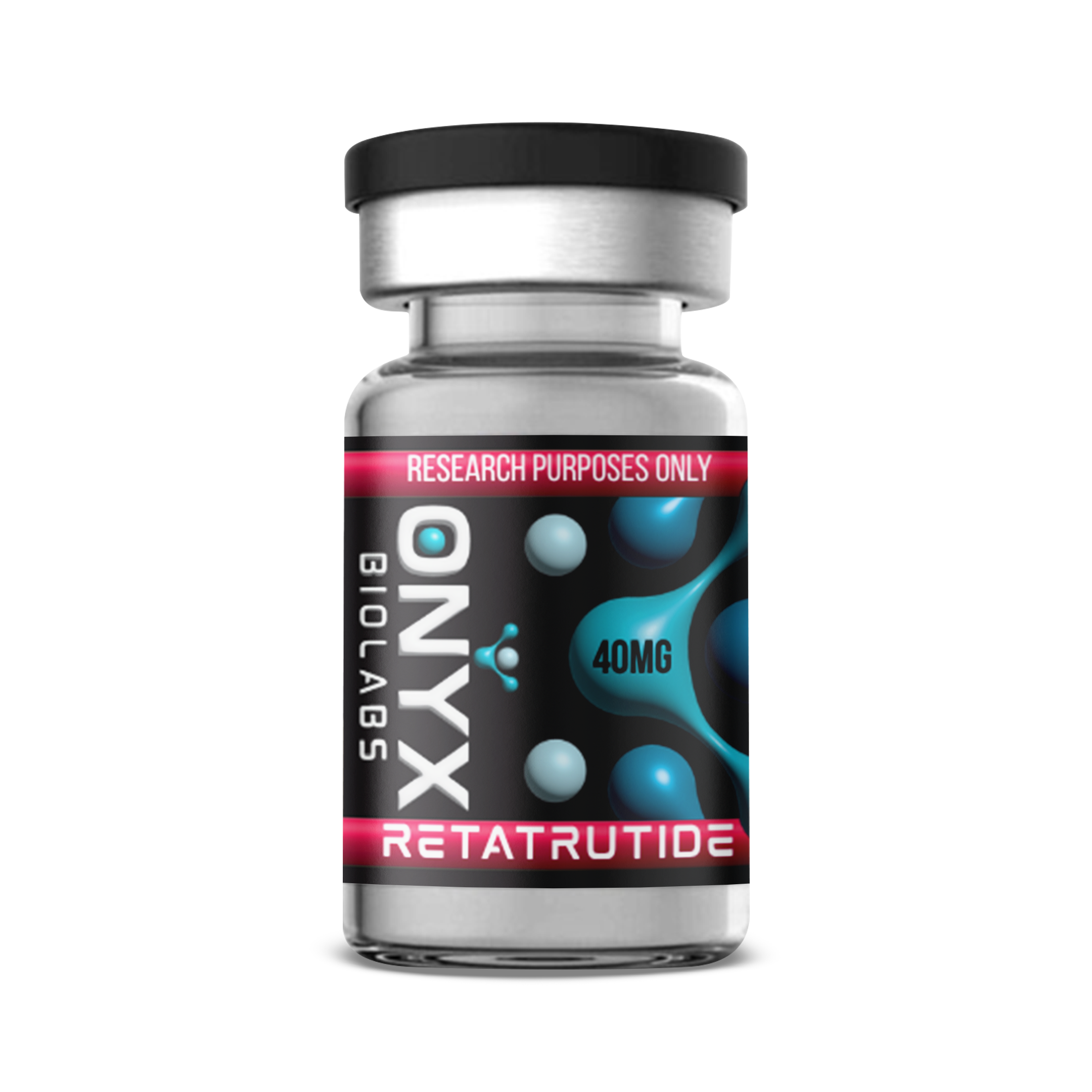
Premium Retatrutide Peptide for Laboratory Research
The Onyx Biolabs Retatrutide Peptide represents the next generation of metabolic research. By simultaneously activating the GLP-1, GIP, and Glucagon receptors, this compound is currently the subject of intensive study regarding its potential impact on metabolic efficiency and energy regulation.
At Onyx Biolabs, we strictly adhere to “research-grade” standards. Our Retatrutide Peptide is not a generic import; it is subjected to rigorous third-party testing to ensure it meets the highest standards required for academic and laboratory research.
Why Choose Onyx Biolabs?
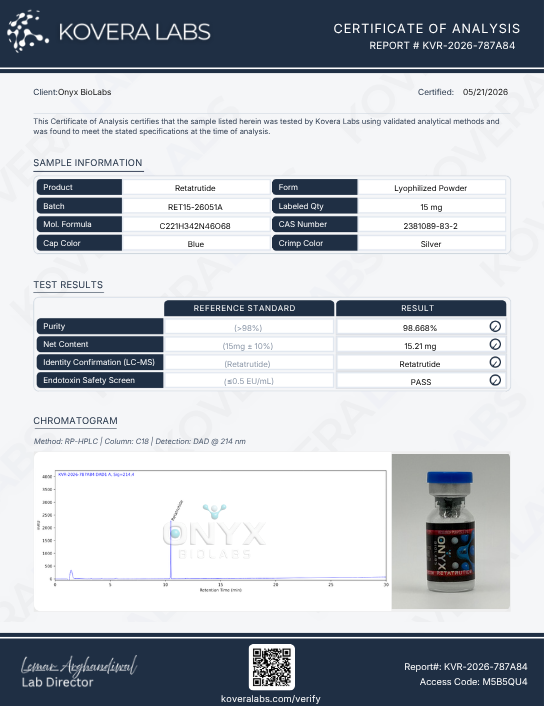
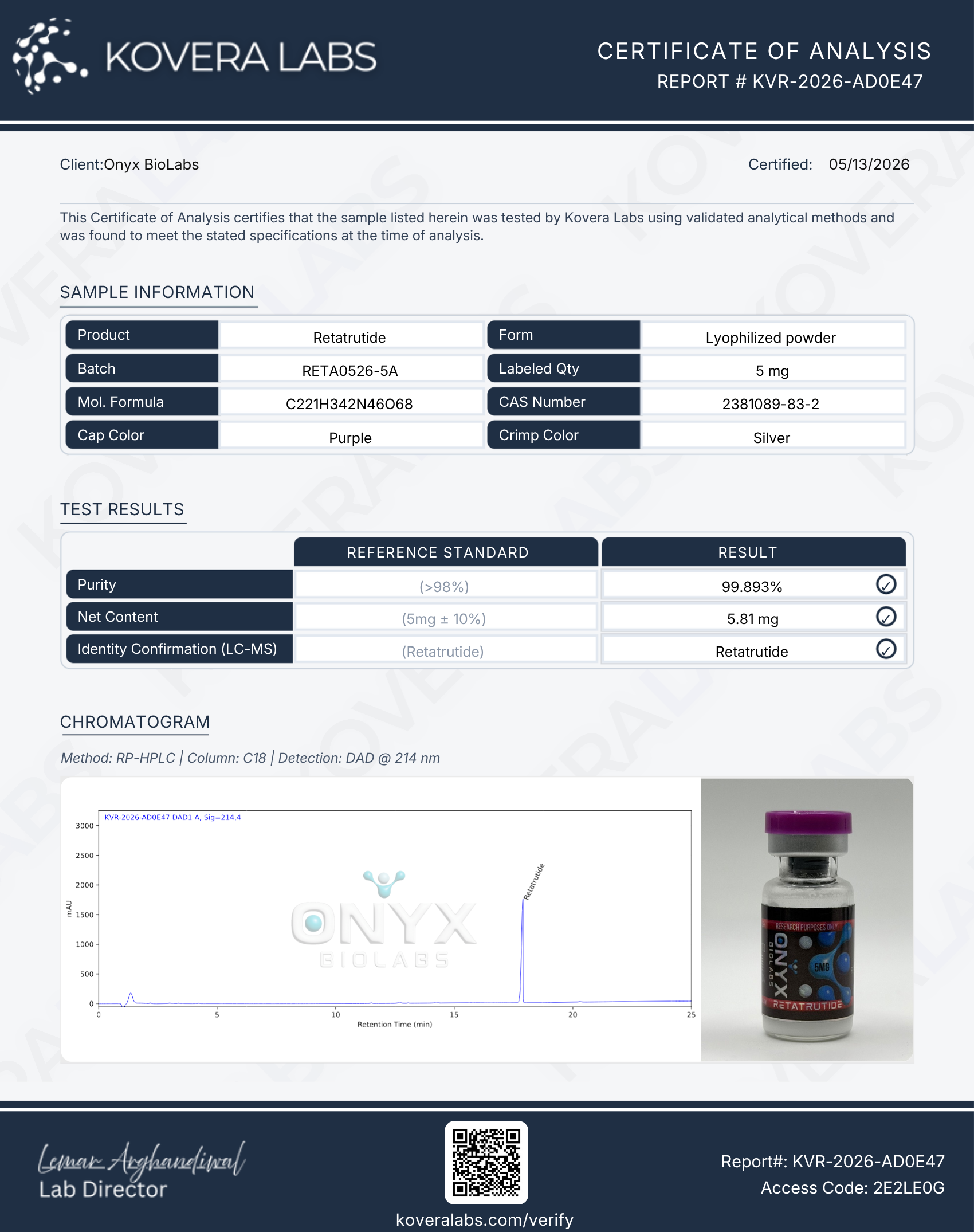
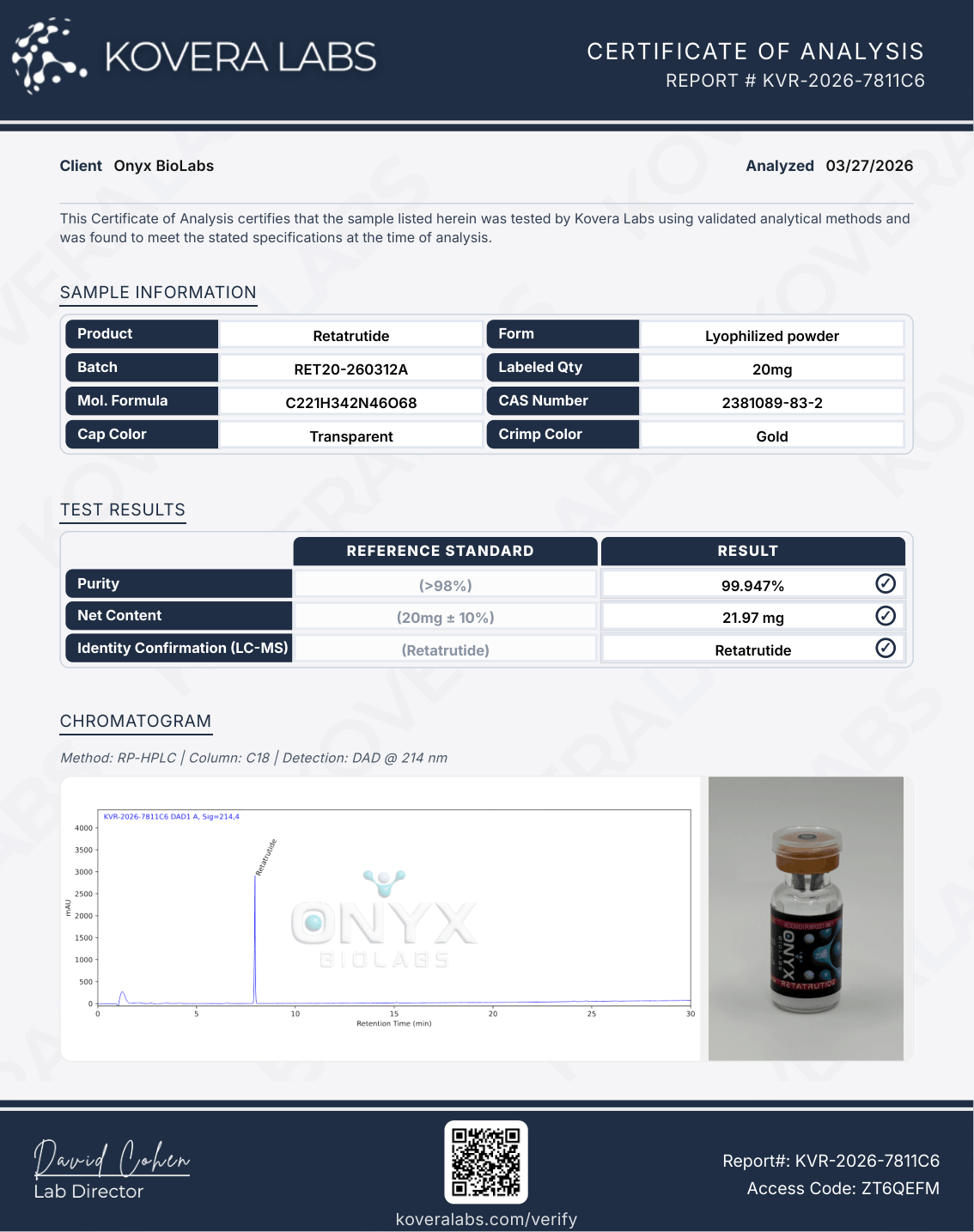
- Verified Purity: Every batch is tested via High-Performance Liquid Chromatography (HPLC) and Mass Spectrometry (MS) to guarantee ≥99% purity. View our COA Lab Results.
- US-Based Operations: We ship directly from our headquarters in Charlotte, NC. No customs delays, no seized packages.
- Proper Storage: All peptides are stored in a climate-controlled environment to prevent degradation before they ever reach your lab.
Understanding the Retatrutide Peptide Triple Agonist Mechanism
This compound differentiates itself from earlier generations of peptides by targeting three distinct hormone receptors simultaneously: GLP-1, GIP, and Glucagon. While traditional research peptides like Semaglutide target only the GLP-1 receptor, and Tirzepatide targets both GLP-1 and GIP, the Retatrutide Peptide introduces the third component: Glucagon.
In laboratory settings, the activation of the Glucagon receptor is hypothesized to increase energy expenditure and improve mitochondrial function. This unique “synergistic” effect is why it is currently the subject of such intense study regarding metabolic efficiency and lipolysis (fat breakdown). By engaging all three pathways, researchers aim to observe more comprehensive metabolic regulation than is possible with single-receptor agonists.
Technical Specifications & Storage
- Molecular Formula: C223H343N45O69
- Solubility: Soluble in Bacteriostatic Water or sterile water.
- Lyophilized (Powder): Store your Retatrutide Peptide at -20°C for up to 24 months.
- Reconstituted (Liquid): Store at 4°C (refrigerated) and use within 4 weeks. Avoid repeated freeze-thaw cycles.
Note: This compound is strictly for in-vitro laboratory research use only and is not for human consumption.
References:
- Jastreboff AM, et al. Triple-Hormone-Receptor Agonist Retatrutide for Obesity — A Phase 2 Trial. New England Journal of Medicine. 2023.
- Rosenstock J, et al. Retatrutide, a GIP, GLP-1 and glucagon receptor agonist, for people with type 2 diabetes: a randomised, double-blind, placebo-controlled, phase 2 trial. The Lancet. 2023.
Advanced Reconstitution Protocols
To maintain the structural integrity of the Retatrutide Peptide, researchers must follow strict reconstitution protocols. Lyophilized peptides are highly fragile and susceptible to physical degradation if handled incorrectly. Always use sterile Bacteriostatic Water or sterile lab-grade water for the reconstitution process.
When introducing the diluent to the vial, aim the needle against the inner wall of the glass, allowing the liquid to slide down slowly rather than injecting it directly into the powder. This prevents the fracturing of the delicate peptide bonds. Once the liquid is added, do not shake the vial. Instead, gently swirl or roll the vial between your fingers until the Retatrutide Peptide is completely dissolved and the solution is clear. Shaking can cause foaming, which indicates that the peptide chains are breaking and the compound is losing its efficacy for your metabolic assays.
Laboratory Safety and Handling Guidelines
Standard laboratory safety procedures must be strictly observed when handling the Retatrutide Peptide. All reconstitution and transfer processes should occur within a sterile environment, ideally under a laminar flow hood, to prevent contamination. Researchers must utilize appropriate personal protective equipment (PPE), including nitrile gloves, lab coats, and safety goggles.
Use only sterile, single-use syringes and needles for both the addition of the diluent and the extraction of the reconstituted solution. Proper disposal of all sharps and biologically active materials must comply with standard institutional guidelines and FDA sharps disposal recommendations.
Extended Storage Best Practices
While short-term storage of the reconstituted Retatrutide Peptide is stable at 4°C for up to four weeks, researchers conducting longitudinal studies should carefully plan their aliquots. If you do not intend to use the entire vial within this timeframe, divide the reconstituted solution into smaller, single-use aliquots and freeze them at -20°C. Avoid repeated freeze-thaw cycles at all costs, as this will rapidly degrade the peptide and compromise your research data.